Publications
Faculty and student researchers at the Morgridge College of Education regularly publish their work in leading journals and scholarly outlets. Explore the latest research publications from Morgridge below.
Faculty Articles
-
Educational Leadership and Policy Studies
“Curriculum wars: A critical policy analysis of K-12 critical race theory bills in state legislatures in the United States”
Lolita A. Tabron | College of Education
Tabron’s article, co-authored with ELPS alumni, provides one of the most comprehensive analyses of the national wave of legislation seeking to restrict how race, racism, and U.S. history are taught in K–12 classrooms. Examining 290 bills introduced across state legislatures from 2017 to 2022, the study traces how conservative advocacy groups and political networks shaped the anti–critical race theory movement. Using critical policy analysis, the authors identify how these bills frame discussions of race and equity, how they limit educators’ ability to teach inclusive and accurate curriculum, and how they reallocate power over what knowledge is permitted in schools. The findings reveal that many of these bills stem from coordinated political campaigns rather than widespread public demand. The article concludes by urging policy, practice, and research strategies that protect equitable, honest, and culturally affirming education for all students.
-
Higher Education
“Insights Into Full-Time Nontenure-Track Faculty at Mid-Career and Beyond”
Dr. Laura Sponslor | College of EducationSponsler and her collaborator Alison Staudinger evaluate traditional career trajectories within higher education specifically at the University of Denver. Sponsler and Staudinger conducted interviews with 22 TPF (Teaching and Professional Faculty) to compare their experiences of being associate vs. full ranked TPF employees. The article discusses hurdles for TPF employees such as role ambiguity and lack of leadership opportunities. Sponsler and Staudinger conclude with suggestions for faculty to foster community and access agency as TPF.
“How Adequately Do States Acknowledge the Broad Access Institution Mission? A Content and Discourse Analysis of State Funding Models”
Cecilia Marie Orphan | College of Education
Orphan’s article analyzes how state funding models in the Western U.S. recognize and support Broad Access Institutions (BAIs)—public colleges that admit most applicants and serve diverse, often underserved populations. Using a 15-point scorecard and policy discourse analysis across 14 states, the study finds that most states inadequately support the full mission of BAIs, focusing narrowly on workforce development while neglecting civic engagement, equity, and student-centered learning. Funding disparities persist, with BAIs receiving less per-student support than flagship universities, and equity is often framed in economic rather than social justice terms. The study calls for more mission-sensitive, transparent, and equity-driven funding policies to better serve BAIs and the communities they support.
The Dissertation Process as One of Healing and Unmasking for Sexual Assault Survivors
Sarah S. Hurtado | College of EducationTwo scholars of color and sexual assault survivors explore how their identities shaped their dissertations on campus sexual violence. Using critical duo ethnography, they examine “masking” and “unmasking” as processes that highlight the personal dimensions of scholarly work. The study emphasizes transparency, reflection, and the potential for dissertation work to serve as resistance and deepen understanding of survivorship and scholarship.
The Path to Advising: Understanding Who Chooses the Profession
Michele Tyson | College of EducationThis study surveys NACADA members to examine how academic advisors enter and remain in the profession. It analyzes demographics, educational backgrounds, and motivations, providing insights for administrators on recruitment and retention and helping define the profession collectively.
“Racial literacy, George Floyd, and the Twin Cities: Seeing race through the longitudinal perspectives of mixed heritage alums”
Marc Johnston-Guerrero | College of EducationJohnston-Guerrero’s article follows 12 mixed-race university alums in the Twin Cities metropolitan area and their reaction to the murder of George Foyd and ensuing events. The article explores how those with mixed heritage backgrounds use their racial and cultural literacy developed through university level education to understand our racialized society.
-
Research Methods and Statistics
“Supporting Parents in Early Literacy Through Libraries(SPELL): A Mixed Methods Study”
Duan Zhang | College of EducationThe article discusses the Supporting Parents in Early Literacy through Libraries (SPELL) Project, which investigates how public libraries can better engage low-income parents of children aged 0–3 in early literacy practices. Using surveys and focus groups, the study identifies major barriers such as work schedules, transportation issues, and limited outreach, despite parents valuing literacy. Findings show that partnerships with trusted community organizations and tailored programming significantly improve engagement. The research emphasizes the critical role libraries play in closing early literacy gaps caused by socioeconomic disparities and recommends strategies like alternative service models and community based outreach to ensure equitable access to literacy resources.
“Sustaining Community Archives in the Post-Custodial Digital Environment”
Krystyna Matusiak | College of EducationThe article examines how the “scan and return” practice—a post-custodial approach where original materials are digitized and then returned to owners—affects the sustainability of community archives in the digital era. Using a case study of the Park County Local History Archives in rural Colorado, it highlights both benefits and risks: while this model promotes community autonomy and broadens representation, poor digitization quality and lack of preservation planning can undermine long-term access. The study shows that sustainability depends on technical factors like high-resolution scanning, metadata, and digital preservation, as well as social factors such as governance, funding, and collaboration. Partnerships with local agencies and academic programs proved essential for rescuing and enhancing the archive, ensuring high-quality digital objects and maintaining community identity.
“Understanding Elementary Students’ Creativity as a Trade-Off Between Originality and Task Appropriateness: A Pareto Optimization Study”
Peter Organisciak | College of EducationThe article explores how elementary students balance originality and task appropriateness when generating creative ideas, revealing a strong trade-off between these two attributes. Using Pareto optimization on nearly 9,600 responses from 387 students, the study identified ideas that achieved the best possible balance of originality and appropriateness. Results showed that highly optimized responses were more likely when tasks allowed flexibility (e.g., “examples” tasks), ideas were elaborated, and students had strong achievement in both reading and math. Teacher ratings predicted optimized creativity only for students already identified as gifted, suggesting bias. The findings highlight that maximizing both originality and appropriateness is rare, and future educational strategies should teach students how to navigate this trade-off to foster creativity effectively.
“Inconsistencies, inaccuracies, and inappropriateness: examining the representation of Chinese students in university archives with radical empathy”
Ruohua Han | College of EducationHan’s paper examines how Chinese international students enrolled at the University of Illinois between 1904 and 1920 are represented in university archives, using radical empathy as an analytical lens. Through qualitative analysis of archival materials and access tools, the authors identify three major representation issues—inconsistencies, inaccuracies, and inappropriateness—in both original records and archival descriptions. These problems stem from systemic challenges such as the complexities of romanizing Chinese names, limited resources for culturally sensitive practices, and structural biases in archival workflows. The study argues that these issues hinder discoverability and perpetuate subtle forms of marginalization, emphasizing the need for inclusive and reparative description practices.
“Research methods and the use of visual representation in library and information science research”
Krystyna Matusiak | College of Education
Peter Organisciak | College of Education
Robyn Thomas Pitts | College of EducationThe paper explores the relationship between research methods and visual representation in Library and Information Science (LIS). Analyzing 751 articles published in JASIST between 2015 and 2019 through content analysis and machine learning, the study finds that quantitative methods dominate the field, particularly data mining, bibliometrics, experiments, and surveys, while mixed and qualitative approaches are less common but increasing. Researchers primarily rely on secondary data sources such as databases and social media, reflecting a shift in data collection practices. Overall, the study expands methodological classifications in LIS and underscores the influence of digital culture and large datasets on research practices, emphasizing the evolving role of visual representation in scholarly communication.
Library and Information Sciences in Arctic and Northern Studies
Spencer Acadia | College of Education
Spencer Acadia’s Library and Information Sciences in Arctic and Northern Studies explores the underexamined role of library and information sciences (LIS) in Arctic and Northern scholarship. The book positions the Arctic and North as part of a global information-knowledge society and demonstrates how librarians, archivists, and information professionals contribute to research, cultural preservation, and digital innovation in these regions. It addresses topics such as metadata decolonization, digital security, indigenous language documentation, and open access to research data, emphasizing the interdisciplinary nature of Arctic studies. Ultimately, Acadia argues that LIS can play a transformative role in supporting future Arctic and Northern endeavors by bridging knowledge systems and enhancing information accessibility.
“Innovative Partnerships to Expand School-Based Health Capacity to Expand School-Based Health Capacity in Rural Communities”
Robyn Thomas Pitts | College of Education
Amy McDiarmid | College of EducationThis article, presented at the 2025 DU Rural Summit, highlights the urgent need to address mental health disparities in rural schools. It outlines how geographic isolation, economic hardship, and healthcare workforce shortages contribute to elevated mental health risks among rural youth. The authors introduce the SPIRIT Program—a rural-hybrid school psychology training initiative funded by $4 million in state and federal grants—which has placed 14 new school psychologists in high-need rural schools, serving around 30,000 students. The program emphasizes culturally sustaining practices, community collaboration, and innovative partnerships with state agencies, educators, and families. Key recommendations include building meaningful partnerships, co-designing programs with rural practitioners, and strengthening the rural mental health workforce pipeline through inclusive recruitment and training strategies.
-
Curriculum and Instruction
“A Family-Based Intervention for Early Elementary Students With Reading and Behavioral Difficulties: A Pilot Study”
Garrett James Roberts | College of EducationThe article reports on a pilot study of Family-RISE, a home-based intervention designed for first- and second-grade students with co-occurring reading and behavioral difficulties. Developed with input from parents and experts, Family-RISE combines evidence-based reading strategies—focused on narrative text comprehension through shared storybook reading—with behavioral supports to improve engagement. Using a multiple-baseline design, the study found large positive effects on narrative text comprehension, with families rating the program highly for usability, feasibility, and social validity. Results suggest that integrating reading and behavior interventions at home is promising for children who typically struggle to benefit from school-based instruction.
"The landscape of US elementary mathematics teacher education: course requirements for mathematics content and methods"
Brette Garner | College of EducationThis article investigates the extent to which U.S. elementary teacher education programs meet the Standards for Preparing Teachers of Mathematics (SPTM) set by the Association of Mathematics Teacher Educators (AMTE). Analyzing 484 programs across 291 institutions, the study finds that most programs fall short of AMTE’s recommendations for mathematics content and methods of coursework. Only 15% of programs meet both standards, with Early Childhood and Bachelor’s-level programs more likely to comply than All Elementary, Master’s, or Certificate programs. They call for greater investment and policy alignment to ensure future teachers are adequately prepared to teach elementary mathematics, emphasizing that improving teacher preparation is essential for student success and educational equity.
“Outcomes of a Virtual Community of Practice with Community Navigators Aimed at Fostering Family–School–Community Partnerships”
Rashida Banerjee | College of EducationThe article examines the Leading in Newcomer Communities and Schools (LINCS) program, a professional development initiative designed to strengthen the role of community navigators (CNs) in fostering partnerships between schools, families, and communities serving immigrant populations. Using the ECHO platform, LINCS delivered a 10-session series to 18 CNs, focusing on U.S. education policies, resource access, self-efficacy, and collaboration skills. Participants valued networking, shared resources, and collaborative problem-solving, though they requested more time for discussion, additional content (e.g., mental health, financial aid), and guest speakers. The study concludes that virtual communities of practice can effectively empower CNs, enhance culturally responsive engagement, and reduce systemic barriers for immigrant families, while recommending program expansion and flexibility for future iterations.
-
School Psychology
"THE COVID-19 PANDEMIC AND ORAL READING FLUENCY”
David Furjanic | College of Education
This article explores the impact of the COVID-19 pandemic on oral reading fluency (ORF) among U.S. students in grades 1–5. Using a national sample, the researchers found that students entering the 2020–2021 school year had significantly lower ORF scores compared to their pre-pandemic peers, and the gap widened between the beginning and middle of the school year. The study attributes these declines to widespread instructional disruptions caused by school closures and the uneven transition to remote learning. It emphasizes that students experienced varying levels of access to educational resources, depending on factors like socioeconomic status and school preparedness. The paper argues that educators and policymakers must understand these disparities to effectively support students moving forward, especially as schools face a post-pandemic population with different academic needs than before.
“Acknowledging Loss: A Consultative Approach to Grief Support for Students with Intellectual Disabilities”
Devadrita Talapatra | College of EducationThis article explores how students with intellectual and developmental disabilities (IDD) face heightened risks of bereavement and mental health challenges, yet are often overlooked in school-based mental health services. It highlights the concept of “double taboo,” where students with IDD are marginalized both due to societal biases and exclusion from mental health support systems. The authors advocate for adapting existing grief support models—particularly Mental Health (MH) consultation—to better serve these students. They emphasize that with appropriate adaptations, such as visual aids and family-provider partnerships, students with IDD can benefit from the same interventions as their peers.
-
Counseling Psychology
“Examining within- and between-member cohesion and working alliance effects on group members’ motivation: a preliminary actor-partner interdependence study”
Lisa M Brownstone | College of EducationThis article presents a preliminary study exploring how group cohesion and working alliance—both within and between group members—affect individual motivation in group therapy, specifically for those healing from internalized weight stigma. Using the Actor-Partner Interdependence Model (APIM), the researchers analyzed data from 26 participants across three online therapy groups. They found that individuals who perceived their group sessions as more cohesive than usual reported increased motivation, especially if they generally felt less cohesion than their peers. Additionally, a member’s motivation was positively influenced when other group members reported stronger working alliances. The study underscores the dynamic and reciprocal nature of group therapy, advocating for attention to both individual and collective experiences to optimize therapeutic success.
"Measuring Asian American, Native Hawaiian, and Pacific Islander (AANHPI) Identity: A Systematic Review and Call for Action"
Keiko M. McCullough | College of EducationMcCullough and her co-authors present a comprehensive review of 97 quantitative measures used to assess racial, ethnic, and cultural identity among AANHPI populations. The authors found that only 35 of these measures were developed or validated with AANHPI samples, highlighting a significant gap in culturally appropriate tools. Using Cameron’s Tripartite Social Identity Framework, they analyzed the conceptual dimensions captured by these scales—such as in-group affect, ties, centrality, knowledge, and behavior. The study emphasizes the need for clearer distinctions between racial and ethnic identity, better psychometric validation, and culturally grounded assessments. It calls on researchers and practitioners to adopt more rigorous and inclusive practices to accurately understand and support AANHPI identity development, especially in light of rising racial discrimination and mental health concerns.
“Influence of College STEM Program Participation on Persistence Among First Generation Engineering Students"
Pat Oliver Garriott | College of Education
The article examines how support programs affect the persistence of first-generation college students (FGCS) in engineering using Social Cognitive Career Theory (SCCT). Drawing on longitudinal data from 473 FGCS across 11 universities, the study found that engineering self-efficacy predicts lower negative outcome expectations over time, and persistence goals strongly influence actual persistence. However, negative outcome expectations did not significantly affect persistence goals. Importantly, FGCS who participated in STEM programs required lower levels of persistence intentions to remain in engineering compared to nonparticipants, suggesting these programs reduce the threshold for translating intentions into action. The findings underscore the critical role of self-efficacy and structured STEM support initiatives in promoting equity and retention in engineering, offering practical implications for program design, institutional policy, and advocacy to broaden participation in STEM fields.
“Multicultural Orientation and Deliberate PracticeCoaching: An Empirically Supported Case Study”
Jesse J. Owen | College of Education
Owen and co-authors explore how therapists-in-training can enhance their multicultural competencies through a structured coaching model. Using video vignettes and four deliberate practice sessions over eight weeks, the study measured improvements in three key areas of the Multicultural Orientation (MCO) framework: cultural humility, cultural comfort, and cultural opportunities. Results showed that both participants improved across all domains, and interviews revealed that the coaching was perceived as helpful and tailored to individual needs. The study provides preliminary evidence that deliberate practice can effectively support multicultural skill development in psychotherapy training, suggesting that hands-on coaching may be more impactful than traditional didactic methods. It also offers a scalable protocol for future training programs aiming to improve cultural responsiveness among mental health professionals.
From Discrimination to Inclusion: A Journey of Transforming and Embracing
Ruth Chao | College of EducationChu-Lien Chao’s book explores the personal and societal transformation from experiences of exclusion and bias toward a more inclusive and accepting environment. Through a blend of narrative and scholarly insight, Chao examines how individuals and institutions can evolve by confronting discrimination, embracing diversity, and fostering equity. The book emphasizes the importance of psychological resilience, cultural awareness, and systemic change, offering a roadmap for educators, mental health professionals, and leaders committed to creating inclusive spaces. It is both a reflective and practical guide for navigating the complexities of identity, belonging, and transformation.
“Advancing Integrated Health Care Through Family, Systems, and Health”
Sandra Bertram Grant | College of Education
The article reviews progress and challenges in implementing integrated health care (IHC) within primary care settings, focusing on mental and behavioral health outcomes. Using a comprehensive analysis of 357 articles published in Families, Systems, & Health between 2018 and 2023, the authors identified key thematic areas such as practice management, family systems, workforce development, and diversity as dominant topics, while technology and implementation strategies were underrepresented. Despite ongoing efforts, many primary care organizations still struggle with sustainable integration models. The authors recommend maintaining emphasis on practice management and workforce development while pairing these with research on financial sustainability and organizational strategies to advance effective, long-term integration
“Counselors’ Spirituality, Attitudes Toward Suicide, and Self-Efficacy in Conducting Suicide Risk Assessment”
Julia Roncoroni | College of EducationThis study explores how counselors’ perceived spiritual support influences their self-efficacy in conducting suicide risk assessments, with a focus on how attitudes toward suicide may moderate this relationship. Surveying 132 master’s-level clinicians and students, researchers found that higher perceived spiritual support was significantly associated with greater counselor self-efficacy. However, this relationship was notably weakened when counselors held avoidance attitudes toward discussing suicide. Other attitudes—such as viewing suicide as common, acceptable, or preventable—did not significantly moderate the relationship. The findings suggest that integrating spirituality into counselor training and reducing communication avoidance can enhance clinicians’ confidence and competence in suicide risk assessment. The study highlights the need for culturally responsive, ethically grounded, and spiritually informed approaches to mental health training and practice.
“There’s more out there: Examining the study abroad experiences of American transgender and gender expansive university students”
Trisha Lynn Raque | College of Education
Raque’s article explores the study abroad experiences of 15 American transgender and gender expansive (TGE) university students through consensual qualitative research. It highlights how these students prepare for international travel by addressing safety, identity, and logistical concerns, and how their experiences abroad are shaped by cultural norms, institutional systems, and intersectional identities. Participants reported both affirming and harmful encounters related to gender, race, language, and healthcare, emphasizing the need for inclusive and supportive study abroad programs. Despite facing challenges such as discrimination and lack of access to affirming resources, many found opportunities for personal growth and identity exploration. The study concludes with recommendations for higher education institutions to improve safety, support, and inclusivity for TGE students studying abroad, advocating for staff training, program audits, and community-building efforts.
Culturally Affirming School Counseling for LGBTGEQIAP+ Youth
Stacy A. Pinto | College of EducationThis chapter explores school counseling practices that support LGBTGEQIAP+ youth in creating safe, inclusive, and connected school environments. It addresses challenges faced by students with diverse sexual and gender identities, outlines professional standards, and provides practical resources and strategies for supporting their academic, social, and emotional development.
-
School Counseling
COVID-19 Pandemic’s Disproportionate Impact on Childhood Bereavement for Youth of Color: Reflections and Recommendations
Jillian M. Blueford | College of EducationThe COVID-19 pandemic increased childhood bereavement in the U.S., disproportionately affecting communities of color due to higher parental death rates from homicide, substance abuse, and heart disease. Data from the Childhood Bereavement Estimation Model (CBEM) show over 700,000 children were newly bereaved in 2020–2021. Hispanic Asian Pacific Islander and Hispanic Black youth experienced the largest increases, while non-Hispanic white children experienced the smallest. The study highlights enduring racial disparities and the need for culturally responsive bereavement support.
-
Marsico Institute
Elevating Equity: The ECTA Inclusion Indicators as a Catalyst for Systemic Change
Alissa Louise Rausch | College of EducationRausch’s article emphasizes the need for systemic change in early childhood education to ensure equitable inclusion for Disabled children, particularly those from marginalized racial, linguistic, and cultural backgrounds. It critiques traditional approaches that prioritize segregated settings and instead advocates for inclusive environments grounded in the social model of disability, disability justice, and culturally sustaining practices. Using Oregon as a case study, it illustrates how the Early Childhood Technical Assistance (ECTA) Inclusion Indicators guide change at state, community, program, and environment levels through collaborative leadership, professional development, and policy alignment. The article concludes that authentic inclusion requires shifting mindsets from “fixing” children to transforming systems and relationships to honor diversity and belonging.
“Playing to Know the World Mathematically”
Julie Sarama | College of Education
Doug H Clements | College of Education

The article s examines how different forms of play can foster early mathematical learning. It challenges the false dichotomy between play and academic instruction, arguing that both can coexist and enrich each other. The authors present a continuum of play—from free play to scaffolded and guided play to playful intentional activities—highlighting how each type offers unique opportunities for developing mathematical concepts such as patterns, spatial reasoning, and problem-solving. They emphasize the importance of teacher involvement in creating rich environments, recognizing mathematical opportunities, and using learning trajectories to guide instruction. Ultimately, the article advocates for integrating play and mathematics in ways that are developmentally appropriate, engaging, and responsive to children’s thinking, ensuring that mathematics is experienced as a playful and meaningful discipline.
Featured Faculty Books
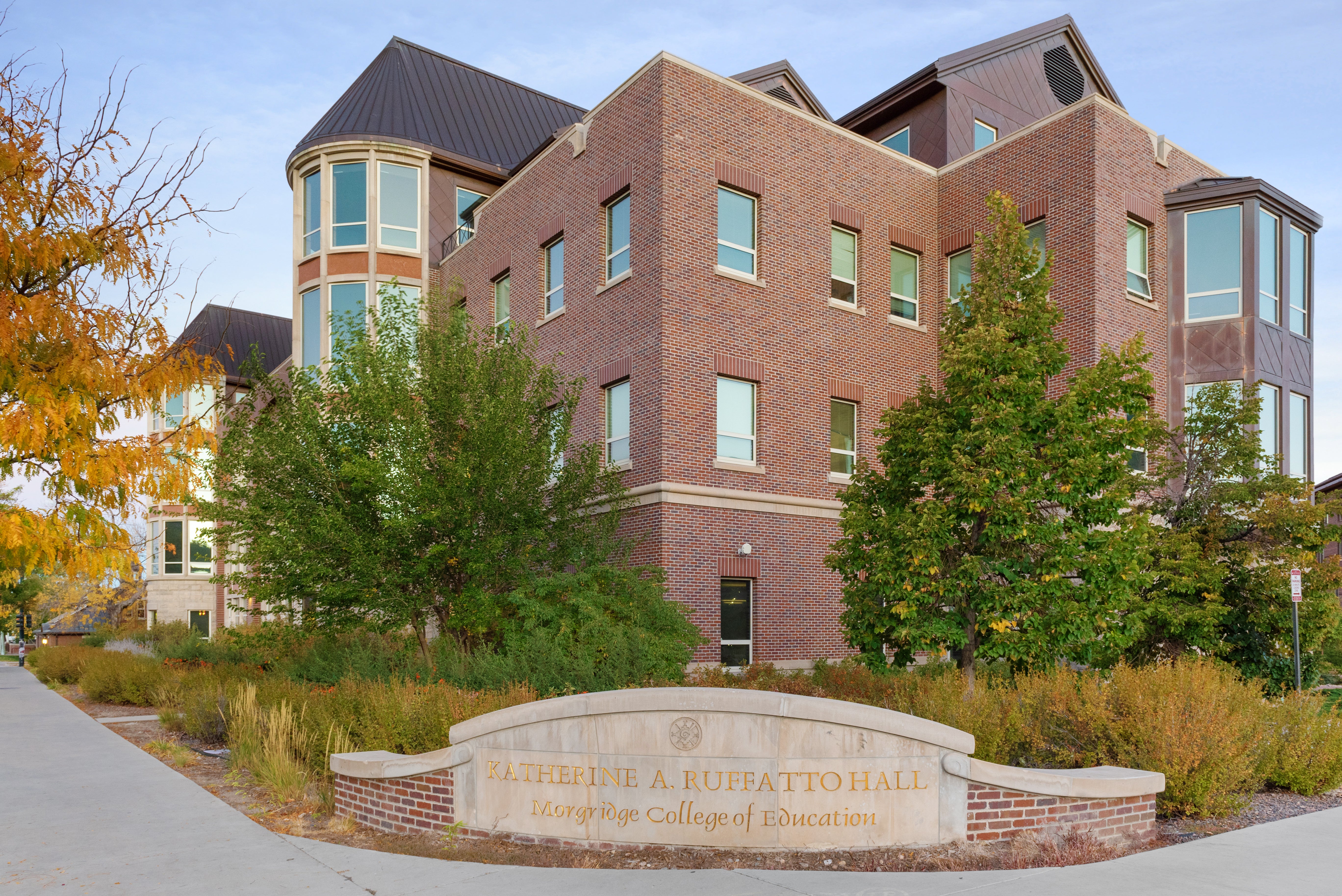
Below is a sample of some of our most recent additions. Please stop by the Dean's Suite (3rd floor of Katherine Ruffatto Hall) to check them out:
Bridging Research and Library Practice Global Perspectives on Education and Training, edited by Krystyna K. Matusiak, Kawanna M. Bright and Debbie Schachter
Advances in Family-School-Community Partnering: A Practical Guide for School Mental Health Professionals and Educators, by Gloria E. Miller, Amanda Arthur-Stanley, and Rashida Banerjee
Leadership for Deeper Learning: Facilitating School Innovation and Transformation, by Jayson W. Richardson, Justin Bathon, and Scott McLeod
Teacher Learning of Ambitious and Equitable Mathematics Instruction A Sociocultural Approach, by Ilana Horn and Brette Garner
The Courage to Learn Honoring the Complexity of Learning for Educators and Students, by Marcia Eames-Sheavly, Paul Michalec, and Catherine M. Wehlburg